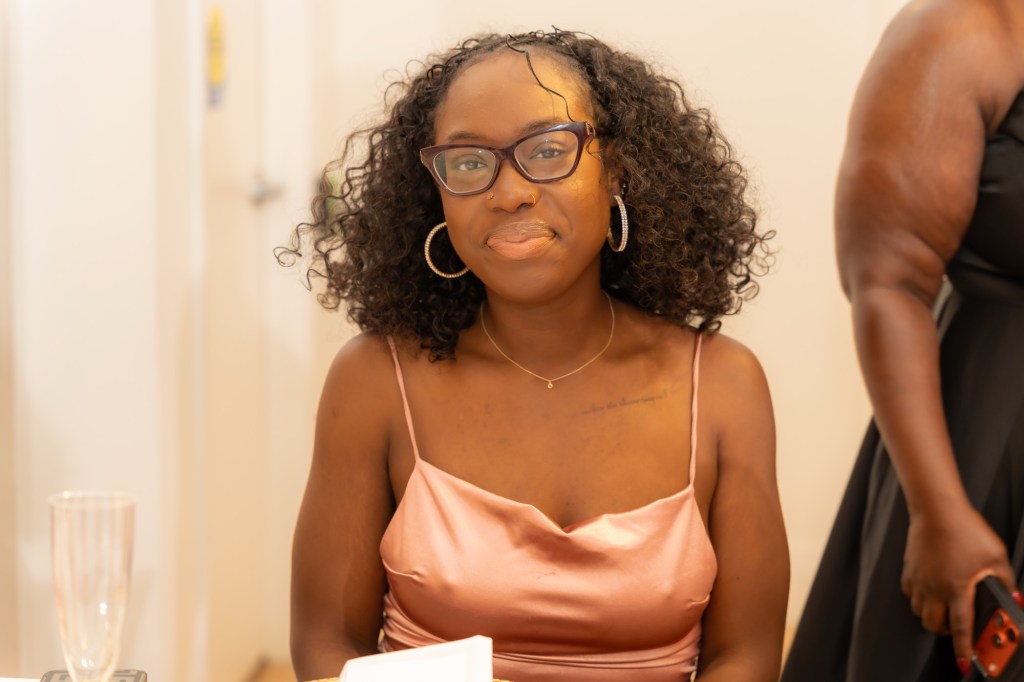
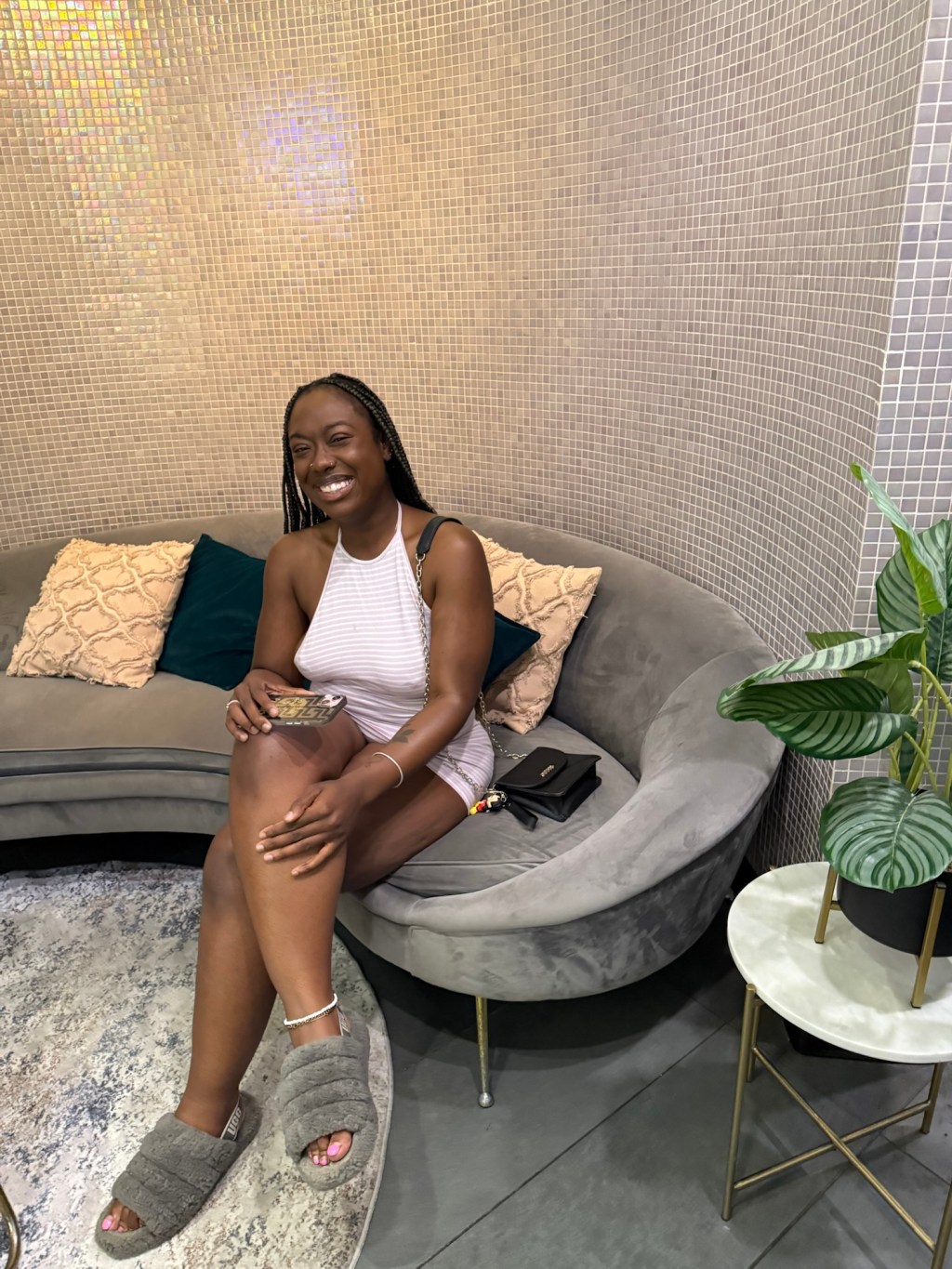
Author: Shavesha Steele | ChevviInLaw

  • The Woman Behind the Strength

    Yesterday, I learned about the idea of intergenerational trauma and the ways the “Strong Black Woman” schema can shape how Black women learn to survive.

    And something about it really stayed with me.

    Because sometimes I wonder: How much of what I call strength is actually survival that I learned to normalize?

    The ability to keep going.

    The ability to figure everything out yourself.

    The ability to work through exhaustion.

    The discomfort with asking for help.

    The feeling that resting means you are falling behind.

    The belief that if you don’t take care of everything, nobody will.

    The instinct to make everything look okay, even when you’re quietly falling apart.

    Maybe some of that isn’t simply personality.

    Maybe some of it is what happens when survival becomes so familiar that you start mistaking it for who you are.

    And I think that is what makes the idea of intergenerational trauma so powerful to me. Sometimes what gets passed down isn’t a specific story that someone sits you down and tells you. Sometimes it is a way of responding to the world.

    You learn to be prepared.

    You learn not to depend too heavily on anyone.

    You learn to make something out of nothing.

    You learn that being vulnerable can be dangerous.

    You learn to carry things quietly.

    And then one day you realize that you are exhausted from carrying things you were never meant to carry alone.

    I don’t want to reject my strength. My strength has gotten me here.

    But I also don’t want survival mode to be the only way I know how to live.

    I want to learn the difference between being strong and having to be strong.

    I want to learn that receiving support does not make me weak.

    That rest is not laziness.

    That softness is not irresponsibility.

    That asking for help does not mean I have failed.

    And that I can build financial security without living my entire life in fear of losing it.

    Maybe healing, for me, isn’t becoming a completely different woman.

    Maybe it is becoming a woman who finally understands that she doesn’t have to earn safety by suffering for it.

    P.s.

    Just a girl navigating her 20’s

  • Politics Found Me Before I Found Politics 

    I believe everything is political.

    Not because I want everything to be political.

    But because, at some point, you realize that some of the things you have experienced personally are connected to decisions much bigger than you.

    I think becoming an adult has made me understand that more.

    I came to Canada as a child from Jamaica. I grew up here, went to school here, built my life here, and learned what it meant to navigate this country as someone who was Black, a woman, and an immigrant child.

    But growing up, I don’t think I had the language to understand how political some of my experiences actually were.

    I just thought I was figuring life out.

    I thought everyone had to figure things out.

    I thought everyone had to learn how to navigate institutions, education, employment, money, housing and adulthood.

    Then I got older.

    And I started realizing that the ability to “just figure it out” isn’t distributed equally.

    Some people have family members who can help them financially when things get difficult.

    Some people can call their parents when they need somewhere to stay.

    Some people have someone who can help them get their first job.

    Some people have a safety net they don’t even realize they have because they’ve never had to live without one.

    And then there are people who become adults and realize that they are the safety net.

    I know what it feels like to have to think about money, housing, education, employment and my future all at the same time.

    I know what it feels like to have responsibilities that don’t always wait until you feel ready for them.

    I have had to learn how to advocate for myself because there isn’t always someone standing behind me who can do it for me.

    And I think those experiences changed the way I see politics.

    Because eventually, you start realizing that the things we call “personal problems” are sometimes connected to much larger systems.

    Housing isn’t just about whether an individual can budget properly.

    Education isn’t just about whether someone works hard enough.

    Employment isn’t just about whether someone is ambitious.

    Immigration isn’t just paperwork.

    Poverty isn’t always a matter of poor choices.

    And opportunity isn’t distributed simply based on who wants it the most.

    There are policies, institutions and systems sitting behind all of these things.

    And those systems have consequences.

    That realization hit differently for me because I am a Black woman.

    I cannot separate my Blackness from my womanhood.

    I cannot separate either of those things from the way I experience the world.

    There are things I notice because I am Black.

    There are things I notice because I am a woman.

    And there are things I notice specifically because I am a Black woman.

    Sometimes I walk into a room and wonder whether I am being underestimated.

    Sometimes I question whether my voice is strong enough.

    Sometimes I wonder whether what I have to say actually matters.

    And sometimes I have to remind myself that the fact that I am questioning my right to be in the room doesn’t mean I don’t belong there.

    Maybe that’s why representation has become so important to me.

    Because when you don’t always see people who look like you in positions of decision-making, you start wondering whether those spaces were ever meant for you.

    And I don’t want to spend my life wondering that.

    I want to be in those spaces.

    Not because I think being Black or being a woman automatically makes someone a better leader.

    It doesn’t.

    But because our experiences shape the questions we think to ask.

    They shape the problems we notice.

    They shape the communities we think about when decisions are being made.

    And I want people like me to be part of those conversations.

    I think about my family too.

    My mother is still in Jamaica.

    So are other members of my family.

    And there is something strange about building a life in Canada while people you love are still somewhere else.

    Immigration can sound like a policy issue when you’re reading about it in the news.

    But it feels completely different when your family is on the other side of the policy.

    That’s when you realize that these aren’t just political debates.

    They are people’s lives.

    They are mothers.

    Children.

    Families.

    People waiting for opportunities.

    People waiting to be reunited.

    People trying to build something better.

    And that is why I struggle when people tell me that politics shouldn’t matter so much.

    Maybe it doesn’t have to matter to everyone in the same way.

    But it matters to me.

    Because I have experienced what it feels like when the systems around you don’t necessarily make life easy.

    I have had to learn independence earlier than I would have liked.

    I’ve had to make decisions about my future while still trying to understand who I am.

    I’ve had moments where I’ve been scared that I wasn’t doing enough, that I wasn’t successful enough, or that maybe I simply wasn’t capable enough.

    And yet, the more I learn, the more I realize that resilience shouldn’t be romanticized.

    Sometimes people aren’t “strong” because they wanted to be.

    Sometimes they were strong because they had no other choice.

    And I don’t want a society that constantly praises people for surviving circumstances that could have been prevented in the first place.

    I want us to ask why those circumstances existed.

    That’s political.

    I want us to ask why some people have safety nets and others don’t.

    That’s political.

    I want us to ask why some communities have resources and others are constantly fighting to be noticed.

    That’s political.

    I want us to ask who is sitting at the table when decisions are being made.

    That’s political.

    And maybe that’s why I believe everything is political.

    Because once you have had to figure out certain parts of life for yourself, you start seeing the connections.

    You realize that your personal story exists within a much larger story.

    My story is not just about me.

    It’s about immigration.

    It’s about race.

    It’s about gender.

    It’s about family.

    It’s about opportunity.

    It’s about education.

    It’s about economic security.

    It’s about belonging.

    It’s about what happens when someone has to build a life without always having the same safety nets as everyone else.

    And I’m still figuring out what I want my role in all of this to be.

    I still have moments where I’m afraid of my own voice.

    Moments where I wonder if what I have to say is important enough to make a difference.

    But maybe that’s exactly why I need to keep speaking.

    Because someone who has spent so much time wondering whether their voice matters should not spend the rest of their life silent.

    I don’t want to simply complain about the systems that affect me.

    I want to understand them.

    I want to question them.

    I want to participate in them.

    And maybe one day, I want to help change them.

    Because I don’t believe I came this far just to learn how to survive.

    I want to learn how to build something better—for myself, for my family, and for the people coming after me.

    And if that makes me political, then so be it.
  • A soft Reintroduction

    My name is Shavesha.
    A name that doesn’t come with a clear definition. No quick Google search. No one-line meaning to explain it.

    For a long time, that felt like something was missing.

    We live in a world where names are often tied to identity—where people can easily say, “my name means this” or “I was named after that.”
    And I didn’t have that.

    But over time, I started to see it differently.

    I guess this is a soft reintroduction to who I am as a person.
    Because in many ways, I’ve been changing, growing, and becoming—and my name has grown with me.

    Maybe my name wasn’t meant to be defined for me.
    Maybe it was something I was meant to grow into.

    So I began to sit with it. To hear it differently.

    “Sha” — soft, almost like grace.
    “Vesha” — a presence, something that is seen and felt.

    Not exact definitions. Not something you’ll find in a dictionary.
    But something I connected to.

    And somewhere in that, I found meaning.

    Not given—but created.

    I realized I didn’t need a formal definition to understand my name.
    I just needed to understand myself.

    Because the truth is, I’ve been becoming my name this whole time.

    In my growth.
    In my discipline.
    In the way I’ve had to rebuild parts of myself.
    In the way I’m learning to show up more fully, more intentionally, and more honestly.

    That’s what Shavesha means to me.

    A graceful presence.
    A woman becoming.

    And the more I think about it, the more I realize—I actually love that my name isn’t easily found or defined online.
    Because it’s unique.
    And with that uniqueness comes a kind of quiet power—one that I’ve had to discover for myself.

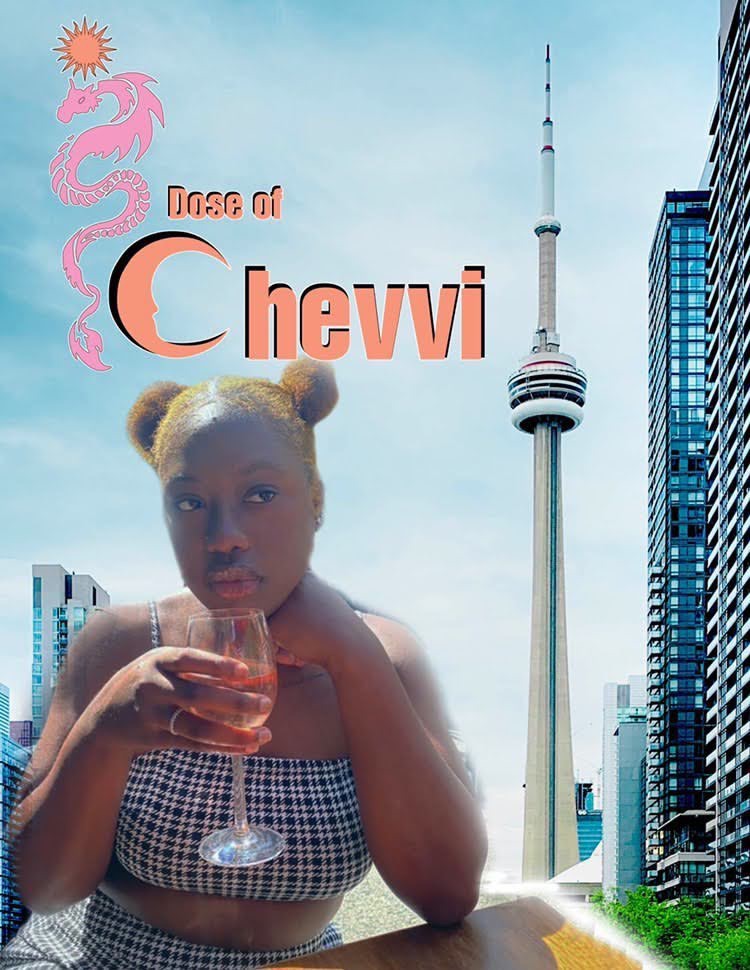
    This space—Dose of Chevvi—is an extension of that.

    A digital scrapbook of becoming.
    Of learning, unlearning, and stepping into who I’m meant to be.

    Fully. Openly. Unapologetically.

    My name may not have come with a meaning…
    but I’ve given it one.

    And I’m still writing it.

    ~ ps. Just a girl navigating her 20’s

  • Untitled post 616

    What’s a quote that perfectly describes your outlook on life

    Dose of Chevvi

    “Where there’s a will, there’s a way.”

    If someone asked me, “What quote perfectly reflects your outlook on life?” my answer would be:

    “Where there’s a will, there’s a way.”

    It’s more than just a quote to me—it’s how I’ve lived my life.

    I remember being in high school when my father took away my laptop because he thought I was misbehaving. Unfortunately, I had an essay due the very next day. Most people would probably see that as the end of the road or a valid excuse for not completing the assignment.

    I didn’t.

    Instead of asking myself, “Why did this happen?” I asked, “How can I still get this done?”

    That’s when I turned to our smart TV. It had internet access, so I used the remote to type my entire essay—one painstaking letter at a time. It wasn’t convenient, and it certainly wasn’t fast, but it got the job done.

    Looking back, I realize that moment revealed something about who I am.

    I’ve never been someone who gives up just because Plan A doesn’t work. My mind naturally starts searching for Plan B, C, or even D. I don’t see obstacles as the end of the story—I see them as invitations to think differently.

    That mindset has stayed with me throughout my life. Whether it’s school, my career, advocacy work, or chasing goals that seem out of reach, I always come back to the same question:

    “What’s another way?”

    To me, innovation isn’t always about creating something revolutionary. Sometimes it’s simply refusing to let your circumstances dictate your outcome. It’s about making the most of what you have, even when it’s far from ideal.

    So yes, if I had to choose one quote that reflects my outlook on life, it would always be:

    “Where there’s a will, there’s a way.”

    Because I’ve learned that determination doesn’t always remove obstacles—it teaches you how to move through them.

    This feels very authentic to Dose of Chevvi: it’s personal, reflective, and ends with a clear life lesson tied back to the original question.

    ~ p.s.

    Just a girl navigating her 20’s

  • Redefining Success

    What are the most important things needed to live a good life?

    For a long time, I thought a good life was about reaching milestones—graduating, getting a good job, making money, owning a home, and proving people wrong.

    But the older I get, the more I realized a good life is built on a few simple things:

    Peace of mind.
    Meaningful relationships.
    Purpose.
    Health.
    And the ability to stand on your own two feet.

    That’s why I work hard. Not because I want to compete with anyone, but because I want a life that no one can take away from me.

    A good life isn’t about having more than the next person. It’s about going to bed knowing you’re becoming the person you were meant to be.

    That’s enough for me.

  • Becoming Her Meant Learning This First

    Becoming Her Meant Learning This First

    There are some apologies you don’t always get to say out loud.

    Sometimes, growth sounds like “I’m sorry”—even if the person never hears it.

    Looking back, I can admit that I didn’t always recognize what I had when I had it. I didn’t fully understand what a healthy kind of love looked like, and in many ways, I ended up self-sabotaging something that was actually good for me.

    It took distance, time, and reflection for me to see things clearly. To understand the difference between attention and intention. Between comfort and real care.

    And with that clarity came accountability.

    Not the kind that tears you down—but the kind that forces you to grow. The kind that makes you pause and say, “I could have done better. I should have known better.”

    But the truth is, sometimes you don’t know better until life teaches you.

    I’ve learned that growth doesn’t erase the past—it just changes how you carry it.

    And instead of seeing certain experiences as punishment, I’ve started to see them as lessons. Lessons that shape you into someone more self-aware, more intentional, and more capable of giving and receiving the kind of love you once misunderstood.

    Some people come into your life to stay. Others come to teach you something you’ll carry forever.

    And even if you don’t get closure, even if you don’t get to say everything you wish you could…

    Growth still happens.

    And sometimes, that’s enough.

    P.s. Just a girl Navigating her 20’s

  • Dear Me

    Write a letter to your 100-year-old self.

    Dear Me at 100

    I wonder if you finally love yourself—really love yourself.

    If you stopped overthinking every decision , every silence, every “what if.”

    If you learned to let life rise and fall without trying to fix it all.

    Did years of therapy finally pay off? Did you stop shrinking for people who couldn’t see you, stop giving pieces of yourself to those who only took?

    Did you accept that some people are on different cliffs than you, walking their own paths, and that it’s okay? That letting go doesn’t mean losing, it means surviving, growing, becoming whole?

    I hope you let yourself cry when you needed to.

    I hope you rested when you were tired.

    I hope you stopped staying in love that drained you, that used your body or your heart as if it were disposable.

    I hope you found love that lifts instead of breaks, that builds instead of takes.

    But even if you didn’t, I hope you discovered that the most important love was always the one you gave yourself.

    Please remind me, the younger me, that walking away isn’t failing.

    That choosing yourself is courage, not selfishness.

    That reality—messy, imperfect, painful reality—is where love grows.

    And I hope, after all the hurt, all the waiting, all the letting go… you finally feel at peace.

    With hope,

    Me

  • The Power of Strong Women in Family Structures

    From a sociological perspective, I think matrifocal families can be more dynamic and effective at strengthening family bonds than traditional patriarchal families. I know this might be an unpopular opinion, but I believe that having strong women and supportive men plays a key role in creating a healthy and balanced family structure.

    With curiosity—Shavesha Steele

  • Letter to myself -Ending 2025

    Letter to myself -Ending 2025

    If no one ever tells you this out loud, let it be written here: you survived a year that quietly reshaped you.

    Dear Me,

    You made it to the end of 2025. Pause for a second and really sit with that. This year tried you in ways you couldn’t have predicted, and yet—here you are. Still standing. Still learning. Still choosing yourself more than you used to.

    2025 wasn’t gentle, but it was honest. It showed you what drains you, what nourishes you, and what you can no longer pretend doesn’t hurt. You learned that walking away is not failure—it’s wisdom. That peace is not boring. That consistency matters more than words. And that you never need to shrink to be loved correctly.

    You grew quieter this year, but stronger. You stopped over-explaining. You stopped chasing clarity from people who thrived on confusion. You started trusting that uneasy feeling in your chest—and every time you did, it proved you right.

    This year taught you that healing isn’t linear. Some days you felt powerful, other days exhausted. Both were real. Both were allowed. And neither erased the progress you were making, even when it felt invisible.

    You learned to protect your energy. To rest without guilt. To take yourself seriously. To believe that what you want isn’t “too much”—it’s simply not for everyone.

    I’m proud of you for choosing growth even when it was lonely. For staying soft in a world that rewards numbness. For continuing to dream, even when disappointment tried to convince you to settle.

    As you step into the next chapter, remember this:

    You don’t need to prove your worth.

    You don’t need to earn basic respect.

    You don’t need to rush what’s meant to last.

    Carry the lessons, not the weight. Carry the confidence, not the fear. Carry yourself the way you wish others had.

    You did more than survive 2025—you became more you.

    With gratitude and trust,

    Me

  • Whose Life Are You Living?

    I’ve learned that trying to become the person your parents hope for can be honorable—but only if it doesn’t cost you yourself. When a life is lived primarily to meet someone else’s expectations, it can slowly fill with regret. Not loud regret, but the kind that settles in quietly and shapes how you show up in love, in connection, and in honesty.

    Love becomes confusing when you’re unsure whose life you’re living. It’s hard to give yourself fully to another person when you haven’t given yourself permission to be fully you.

    I hope people remember that respect for parents doesn’t require self-abandonment. You can honor where you come from without losing sight of where you’re going. And sometimes, learning what love is starts with choosing authenticity over obligation.